
Why is Quebec Banning Public Prayer?
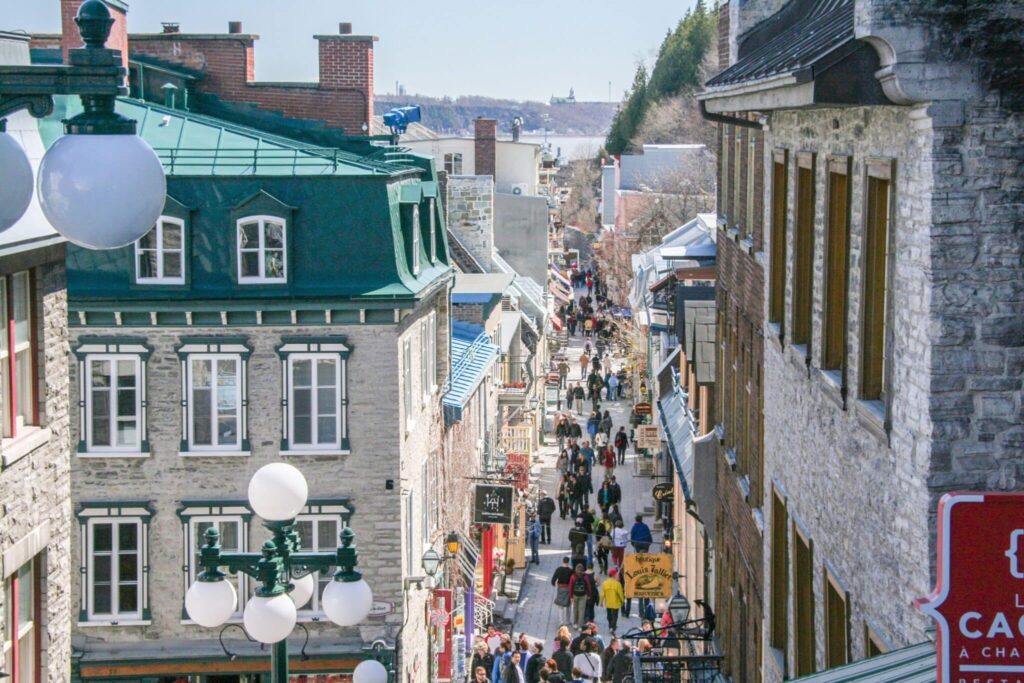
The Quebec government has announced plans to ban public prayer. This should come as no surprise. Premier François Legault stated bluntly back in late 2024 that seeing “people praying in the streets, in public parks, is not something we want in Quebec… when we want to pray, we go to a church, we go to a mosque, but not in public places.” Recently, Quebec’s Secularism Minister, Jean-Francois Roberge, characterized the “proliferation of street prayers” as “a serious and sensitive issue” that created “discomfort”.
Although the idea of a prayer ban is unpopular in English Canada, it will play well with segments of the Quebec electorate uneasy about immigration and religion. It helps the government firmly signal its support for Quebec’s now-dominant secular religion, one that treats other religious practices as a private matter with no place in public life.
Premier Legault’s thoughts on public prayer serve as stark contrast to Quebec’s religious heritage. For centuries, Quebecers — especially Roman Catholics — prayed publicly, without issue. From the time of colonization, outdoor worship was part of Canada’s religious and cultural life. In fact, after completing his second voyage to Canada, Jacques Cartier celebrated Mass on a small island, Isle-aux-Coudres, in modern-day Quebec.
Prayer and political demonstrations
The Premier and the Secularism Minister do not seem concerned about public Catholic rites, perhaps because they no longer occur or generally go unnoticed, or because they are seen as a quaint, harmless remainder of Quebec’s heritage. Rather, their problem is with mass Muslim prayers taking place in public spaces, especially in Montreal. Roberge specifically references the public Muslim prayers organized by Montreal4Palestine, which appear to be both a religious ritual and a political statement, and intentionally so.
After Pro-Palestine demonstrations, many demonstrators have rolled out prayer mats on the street in front of Montreal’s Notre-Dame Basilica and recite Arabic prayers. Many Quebecers likely perceive these prayers not as a good faith religious practice, but as a loud and performative form of political theatre.
Quebec’s secular nationalism
Quebec’s discomfort with Muslim public prayers is easy to understand. The Roman Catholic Church was once a dominant social and political force in the province. But this has changed radically since the Quiet Revolution of the 1960s. Many Quebecers still associate religious authority with oppression. Today, Roman Catholicism, which is relatively powerless in the province, is no longer seen as all that threatening, but Islam — the fastest-growing faith among Quebec’s population – is increasingly viewed by the government as a cultural and social challenge. Several year ago, Quebec’s government forbade wearing visual religious clothing or symbols such as the hijab or niqab in various government jobs. Now, Muslim prayer in public spaces is framed as another threat to Quebec’s secular identity that must be restricted.
Guillaume Rousseau, co-president of Quebec’s State Secularism Act Committee, summarized this thinking: “We really insist that freedom of conscience is especially important for children and … insist on freedom of religion but also freedom from religion.” In other words, the government portrays public prayer as a force that assaults the irreligious sensibilities of Quebecers. In this narrative, Quebec’s secular government protects innocent citizens’ eyes and ears from the imposing spectacle of mass prayers in public spaces.
But the ban is really protecting Quebec’s sense of itself as a secular nation. Quebec’s version of secularism has become a defining feature of the province and a marker of cultural distinctiveness from both English Canada and recent immigrant populations. By targeting public prayer, the government reinforces its narrative of protecting Quebec identity and values against religious influences it deems oppressive.
Quebec secularism and Christianity
Quebec’s official secularism has also impacted Christians directly. For example, in 2023, an evangelical Christian group planning a “Faith Fire Freedom Rally” discovered that its booking at the Centre des Congrès de Québec was canceled. The official reason was the group’s opposition to abortion, despite organizers insisting the rally was not about abortion. Premier Legault justified the decision, saying, “We’re not going to allow anti-abortion groups to put on big shows in public places.”
Quebec’s version of secularism is not laissez-faire (let it be), but a kind of cultural dirigisme. The government takes an active role in suppressing public expressions of religiosity that conflict with Quebec values.
Why this Ban will be Difficult to Enforce
We do not have many details on the nature of Quebec’s intended prayer ban. On paper, a ban on public prayer may sound straightforward. In practice, it will be difficult to enforce predictably or fairly. Several challenges stand out.
For example, what counts as prayer? Inevitably, police or by-law officers will be tasked with distinguishing between a prayer and a speech with religious content, a collective recitation of a sacred text or creed, singing a religious song, or even holding a moment of silence or quietly meditating. In fact, for all we know, depending on how the law is drafted, several of these could legally be considered prayer, even if religious people would call it something else. For police to watch for and attempt to identify and stop “prayer” in public places risks severe state intrusion in people’s lives.
It’s also doubtful that such a ban would be enforced equally against all religions. A Catholic saying the rosary quietly on a park bench or a few Protestant friends quietly praying before having lunch in the park is unlikely to draw the same scrutiny as a group of Muslims facing East on prayer mats. This may create a perception of discrimination, likely leading to litigation and increased political tension.
One could argue that predominantly Muslim political protests that happen to involve prayer are objectionable for other reasons – for example, that they are designed to obstruct or intimidate persons worshipping in a nearby church, or others who are simply trying to walk through the park. But in that case, the prayer is not the problem per se. Rather, the size and noise level of the religious gathering might be a problem. Or the message being shared – if, for example, it encourages violence towards a person or group of persons.
Quebec’s prayer ban will undoubtedly violate Charter freedoms of religion, expression, and assembly. But the Quebec government will almost certainly protect the bill from invalidation by a court by invoking the notwithstanding clause.
How Christians Should Think about Prayer Bans
Christians should be wary of any government attempt to censor or regulate prayer as such, even when, as in this case, Christianity is not the primary target. The state has no authority to forbid people from praying on public property.
Although Quebec’s proposed prayer ban is framed as a response to Islamic worship and prayer, a prayer ban will inevitably affect Christians as well, requiring them to practice this aspect of their faith in private. This brings to mind Daniel, who prayed openly – at a window in his room, granted, but a room that the King had given to him, and in a place others could see. Daniel defied King Darius’s decree, knowing that doing so could cost him his life.
Christians today are called to push back against laws that suppress or conceal the faith. When public witness is silenced, the gospel is pushed to the margins, allowing a false, secular gospel to fill the void, which leads Canadians further from the truth.