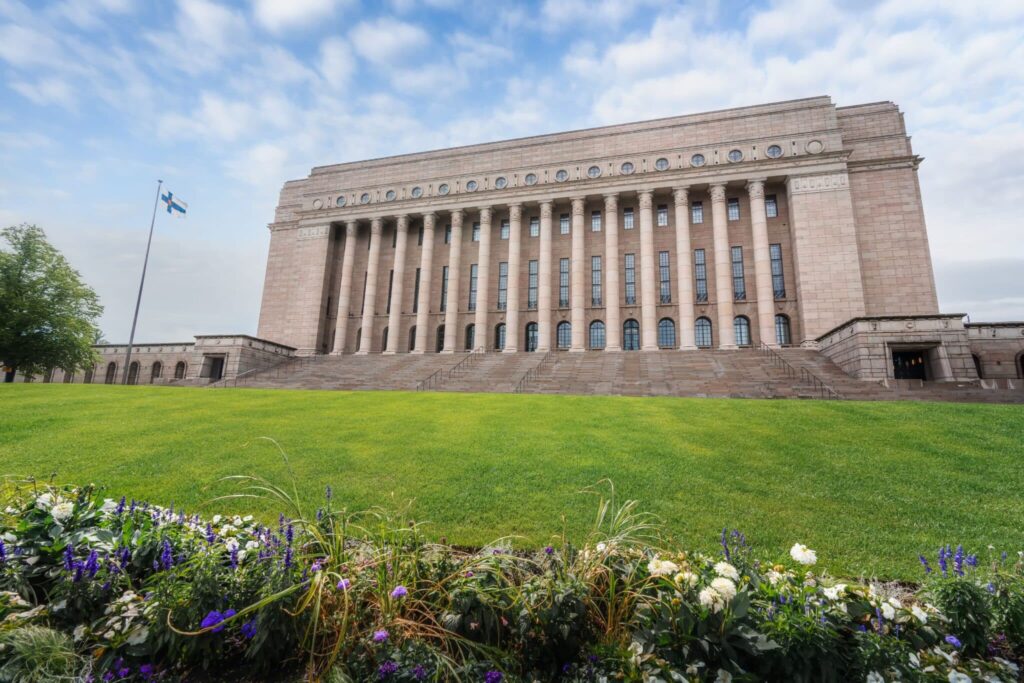

Last week, the Ontario Superior Court ruled that Parliamentary Protective Services (PPS) violated the Charter rights of Campaign Life Coalition (CLC) when it stopped the group from displaying abortion-related imagery on Parliament Hill.
CLC’s Encounter with PPS
In May 2023, CLC, a pro-life organization and one of the organizers of the National March for Life, held a press conference the day before the annual march.
As part of its planned display, CLC intended to show large signs featuring photographs of aborted fetuses. The organization described the images as depicting victims of abortion at various stages of development.
While the display was underway on Parliament Hill, PPS officers intervened. The PPS is an office of Parliament responsible for the security of Parliament.
PPS officers informed CLC that the images could not be displayed because they were considered too graphic and violated Parliament Hill’s rules.
These rules referenced by PPS were not enacted directly by the Liberal government or by the PPS, but by a committee responsible for managing access to and conduct on Parliamentary grounds.
CLC complied with the PPS’s directive but subsequently brought a Charter challenge to court, arguing that its freedom of expression had been violated.
PPS’s Justification for Censoring the CLC
PPS argued that CLC’s signs violated the rules against obscene messages and messages promoting hatred or violence.
PPS challenged the accuracy of CLC’s pictures, implying that CLC’s displays did not accurately label the age of the aborted baby depicted in the images.
PPS also relied on expert evidence to prove that CLC’s abortion-related images could potentially traumatize children and women who have had abortions.
The Court’s Analysis
Justice MacLeod, the judge presiding over the case, rejected PPS’ arguments.
On the claim of obscenity, the Court found that the PPS’s definition of obscenity was vague, making it difficult to justify restricting expression on that basis.
Regarding the PPS’s claim that the images promoted hatred and violence, the Court questioned whether CLC’s images could be characterized as promoting hatred or violence simply because the images characterized abortion as murder. The judge implied that the images were intended to prevent violence against the unborn. Thus, arguing that the images promoted violence did not make sense.
The Court declined to rule on the scientific or medical accuracy of the imagery but held that the accuracy of CLC’s displays has nothing to do with whether their speech is protected under the Charter.
On the argument that CLC’s signs could traumatize women and children, Justice MacLeod noted the absence of evidence showing that vulnerable individuals were present at the time of CLC’s demonstration. Justice MacLeod also observed that PPS did not sufficiently explain why less restrictive measures could not address their concern.
Justice MacLeod noted the important constitutional principle that “tolerating unpleasant, even shocking, expression is the price we pay in a free and democratic society.” He also said that encountering controversial or disturbing messages may be an inherent feature of visiting Parliament Hill.
The Decision
The Court ultimately concluded that PPS had violated freedom of expression.
Importantly, CLC also asked the Court to strike down newly adopted rules on graphic imagery, which could be used to prevent the organization from setting up future displays. However, the Court declined to do so because the committee responsible for enacting those rules was not a party to the case, and because CLC had not properly applied for a display permit in the first place.
Why the Ruling Matters
While ARPA does not use abortion victim imagery in its political advocacy, it welcomes this decision as an important affirmation of freedom of expression in Canada’s public square.
The ruling confirms that public spaces like Parliament Hill remain important forums for political expression. The Court’s reasoning confirms that that government cannot restrict expression simply because it is offensive, thought to be inaccurate, or viewed as potentially harmful to some people.
Whatever one’s view of CLC’s signs, the underlying principle remains the same: in a constitutional democracy, the state must meet a high threshold before it can censor political expression in public spaces.
Next Steps
It remains to be seen whether CLC will challenge the committee’s rules against graphic imagery.